
BestMoney and NerdWallet are two excellent online resources that can help you make informed financial decisions. To varying degrees, they have a certain amount of informational content, comparison tools, and other resources to empower you to improve your financial health and literacy.
But while they’re both very useful platforms, they vary in several ways.
Let’s dive deeper into these two platforms, BestMoney vs NerdWallet, going factor by factor to see how they vary and where they align, including some recommendations for which one might better serve your needs.
At-a-Glance
| BestMoney | NerdWallet | |
| Primary Focus | Product comparison and aggregation | Educational content and financial literacy |
| Main Strength | Side-by-side offer comparisons from 120+ brands | Comprehensive editorial content and guides |
| Content Style | Concise, decision-oriented, practical | Long-form articles, in-depth guides |
| Business Model | Ad-supported, partner compensation | Partner compensation with editorial firewall |
| Comparison Approach | Personalized rankings with filters and “best for” tags | Top picks with star ratings and detailed methodologies |
| Best For | Quick product decisions when you know what you want | Learning financial basics and exploring topics |
Scope and Overall Focus

BestMoney’s primary focus is on comparing concrete offers rather than covering every possible financial topic. It aggregates offers from more than 120 financial and insurance brands and presents them side‑by‑side, often with filters or “best for” tags that help you narrow down options quickly. It does offer some educational content, but its main focus is helping you conveniently compare different mortgages, loans, and cards.
NerdWallet is the ubiquitous personal finance encyclopedia. It’s well known for a wealth of articles and other informational content that teaches you the basics of spending, saving, and investing. Its “Making Money” and other hub pages are essentially full editorials, often with multiple long‑form guides and explainers for each subtopic. It does offer several comparison tools and calculators, but its strength is in its editorial content.
In short, BestMoney is for helping you make a specific product decision, whereas NerdWallet is more suitable when you’re still learning the basics.
Business Model and Impartiality

Both platforms are free to use, funded primarily through commercial partnerships and affiliate relationships with financial providers.
BestMoney is ad-supported, while also disclosing that partner compensation may influence placement and rankings — so it’s not exactly an independent third party. However, unlike many other comparison sites, it’s not a sales machine; you won’t find your inbox flooded with emails 10 minutes after running a search.
This is because BestMoney isn’t itself a lender or broker. You can’t apply for products directly on its platform, and it can’t pull your credit (it’s important to be cautious with platforms that can do this, as it can impact your credit score).
NerdWallet is also funded through partner compensation. Its advertiser disclosure explains that partners pay the company (which may influence which products appear on the site and where they appear), but also that editorial recommendations are based on independent research and not directly controlled by advertisers. The company states that product reviews and comparisons are objective, that editorial staff compensation is not tied to favorable coverage, and that a clear firewall exists between editorial and commercial teams.
This checks out in practice. You can tell that NerdWallet is even-handed in its editorial commentary just by reading the articles; whenever a writer recommends a product, they give good reasons for doing so.
The key takeaway is that both BestMoney and NerdWallet are commercial platforms, not consumer advocacy nonprofits. However, while both depend on partner relationships, neither is structured around them completely (as is the case with many other sites in this space).
Rankings & Methodology
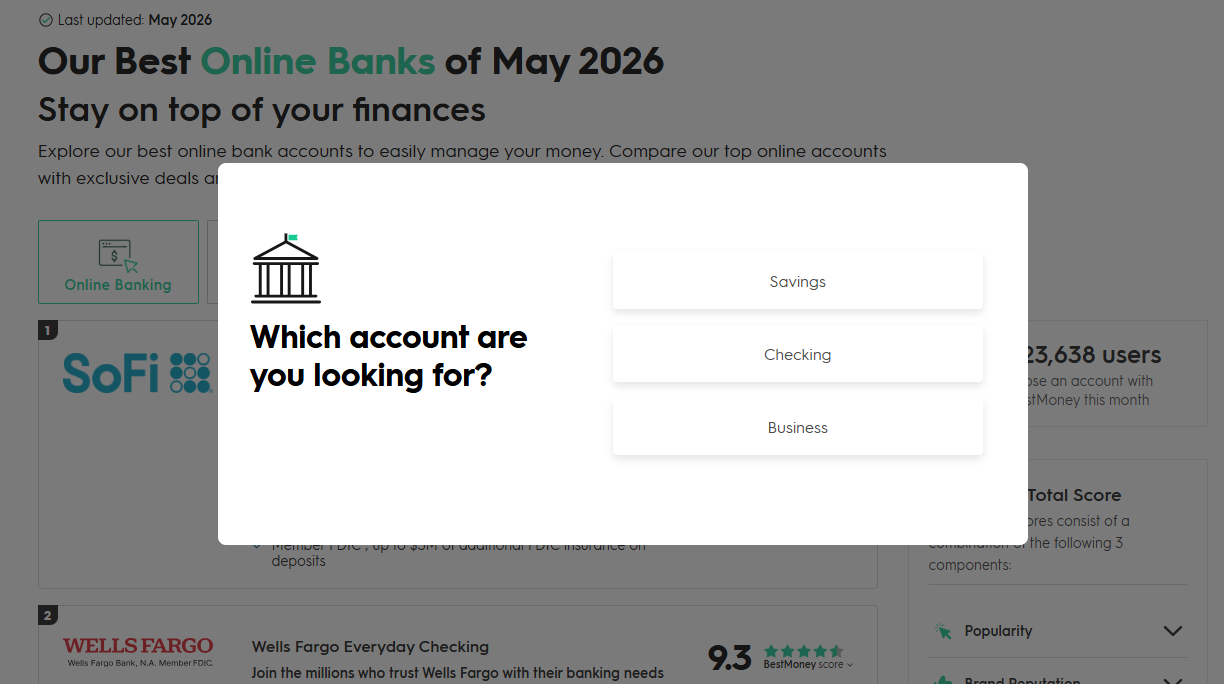
BestMoney’s rankings are all about personalization. Before the platform starts recommending options, it will collect your relevant personal details (age range, zip code, insurance status, etc.). Once it has what it needs, it will produce a list of options for you to consider and provide links to provider websites next to each option — ranked by factors like approval times, rate ranges, and standout features. Again, partner compensation can influence these rankings, but affiliate disclosures should always be accessible on-page.
NerdWallet has publicly documented rating methodologies for products like credit cards, as well as general editorial guidelines. The platform explains which factors go into its star ratings, and how products are scored and updated over time. Similarly, its advertiser disclosure reiterates that partner relationships can affect which products are reviewed or appear in lists, but it also asserts that ratings and recommendations themselves are grounded in research.
Content Depth and Editorial Style
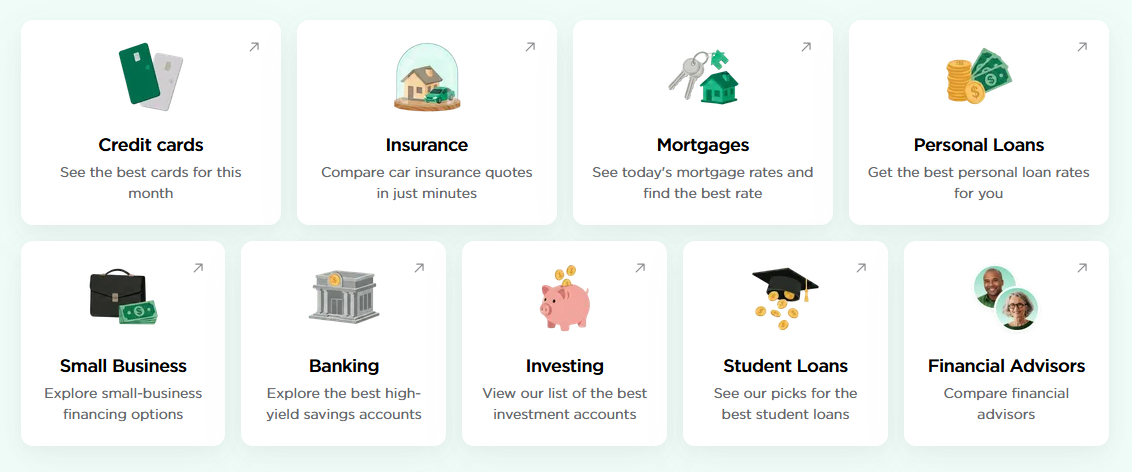
BestMoney’s content tends to be concise, practical, and decision-oriented. It’s not trying to teach you anything, per se; it’s giving you just enough to help you make informed decisions. Its posts lean heavily on structured information: tables, pros and cons bullet lists, quick‑read FAQs, and clear calls to action alongside contextual guidance.
NerdWallet, by contrast, is built as an editorial platform with a large team dedicated to reporting, writing, fact‑checking, and updating content. Its articles frequently run longer, with multiple sections covering definitions, pros and cons, examples, and step‑by‑step guidance. It uses a diversity of sources, maintains a commitment to providing balanced, complete information, and is untethered from advertiser outcomes. It’s important to remember that NerdWallet does earn affiliate commissions, but that shouldn’t make you skeptical of the findings it reaches.
If you prefer short, action‑oriented content that stays close to the comparison at hand, you may find BestMoney’s style more efficient. If you like reading long‑form guides and exploring related topics around a money decision, NerdWallet will often go deeper.
Usability and User Experience
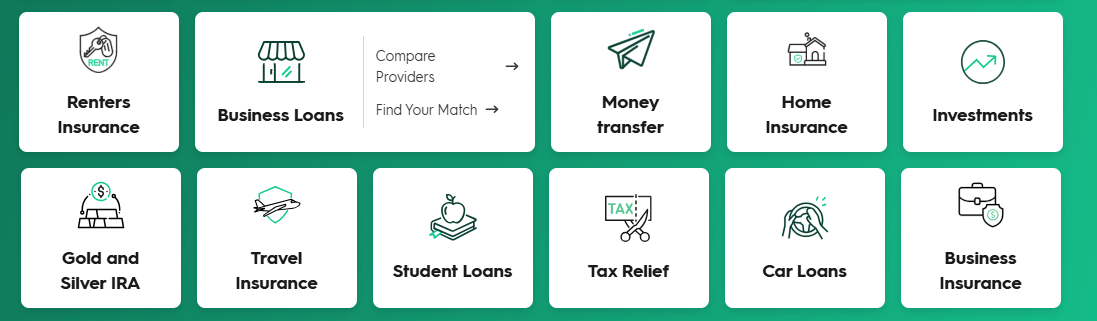
BestMoney’s user experience is carefully streamlined. The home page and category pages quickly route you into specific comparison journeys, with prominent tables showing key variables like APR ranges, loan amounts, minimum credit scores, and headline perks. The design emphasizes clarity and simplicity; you see the key numbers, skim short review snippets, and click through to a partner when you’re ready.
This is very much in line with the platform’s user‑centric experience, reducing the amount of research you have to do by aggregating options in one place and presenting them in a digestible way. If you already know roughly what they’re looking for, whether that’s debt consolidation loans or small business financing, this is exactly what you need.
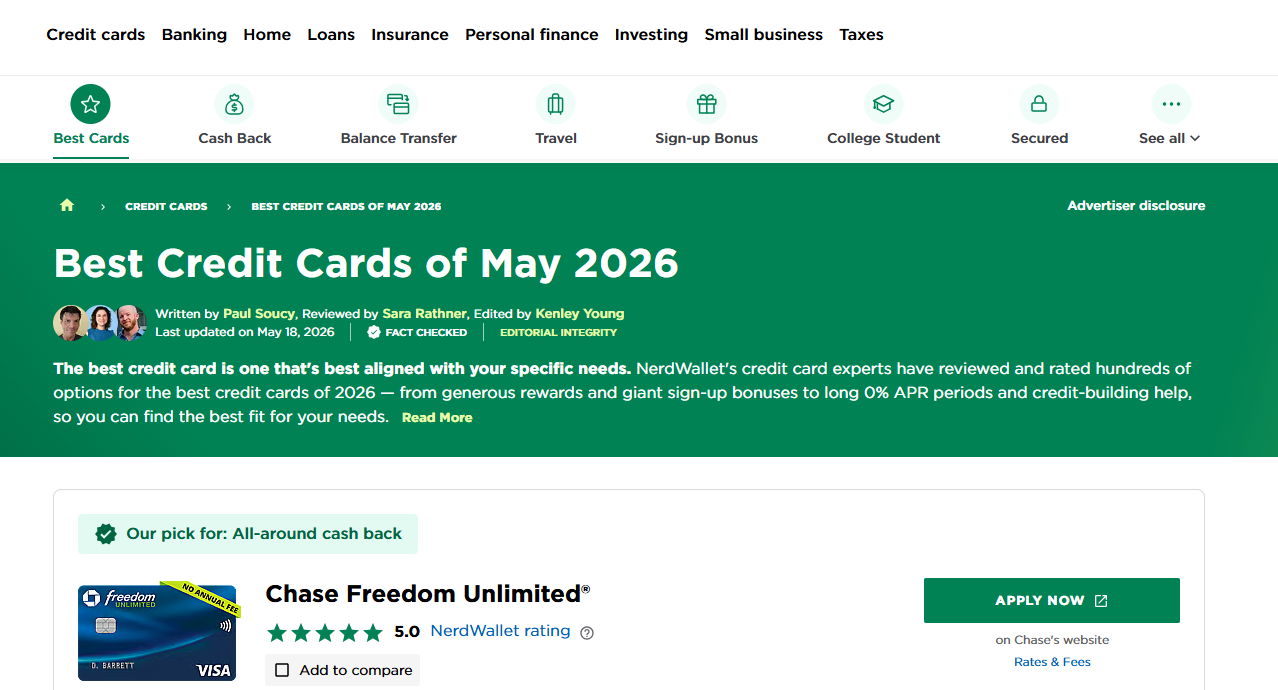
NerdWallet’s UX is more like a digital magazine. If you visit the homepage, you’ll navigate via top‑level categories (credit cards, banking, loans, investing, insurance, taxes, and more), with sub‑navigation into guides, calculators, and comparison tables. However, you’re more likely to come across NerdWallet via Google’s search results; its SEO game is strong, and it will be the first option you see when you look up a lot of basic (or not-so-basic) financial questions.
How Each Site Handles Comparisons
On BestMoney, comparisons are front and center. Category pages display multiple providers in structured tables with key fields like APR, loan amount ranges, term lengths, fees, and “best for” labels. Short review blurbs and pros/cons help you understand why a provider appears on the list, and you can typically click through to more detailed reviews or educational articles if you want context.
NerdWallet also uses tables and top‑picks lists, but they’re often integrated into longer explanatory content. Its “best of” pages typically present:
- A list of top products with star ratings and brief summaries
- Links to detailed reviews for each product
- A methodology section explaining how products were selected and what factors weighed most
In some cases, NerdWallet’s comparison tables only show providers who pay to be featured, which can limit the view of the broader market. As such, a lot of the platform’s lists tend to overlap heavily with its list of affiliate partners; take from that what you will.
Both platforms can be great for narrowing a large field, but neither should be mistaken for a complete, unbiased market survey. At face value, BestMoney’s comparisons are less biased than NerdWallet’s, but you should always conduct independent checks if you’re in the final stages of product selection.
Which Platform Suits Which User?

As you might already have guessed, these two platforms are meant for entirely different users. While they do have some overlap, they do certain things really well and should be turned to in specific situations.
BestMoney is best if:
- You’re already fairly clear on what you want, whether that’s business funding options or a personal loan between $10,000–$30,000, and you mainly need a well‑organized set of offers to compare quickly.
- You don’t need an in-depth explanation of the financial product you’re considering.
- You’re comparison-shopping across multiple categories (loans, insurance, credit cards, business finance, etc.) and want a consistent, streamlined shopping experience across all of them.
NerdWallet is best if:
- You’re more interested in learning the basics of finance, diving into specific financial topics, or patching gaps in your financial literacy.
- You appreciate detailed, documented methodologies for product ratings and want to understand how star ratings and “best of” lists were constructed.
- You’re comfortable with a broader, more media‑like experience where you read articles, watch videos, and then move into comparison tables.