
Many cleaning companies offer two different ways to pay: sign up for a membership that discounts each cleaning, or book cleanings one at a time as you need them.
Which one costs less depends on how often you book cleanings, how the company structures its pricing, whether the membership carries a monthly fee, and what happens if you need to skip or cancel a visit. Both options are reasonable; the answer of what’s best depends on what you’re looking for. Let’s dive in and break down ‘Cleaning Membership vs Pay Per Clean’:
How Pay-Per-Clean Works

Pay-per-clean is exactly what it sounds like. You book a cleaning when you need one and pay for that visit only. There’s no recurring fee, so nothing comes out of your account during months when you don’t schedule anything.
Plenty of companies let you book a one-time cleaning or set up recurring visits without a subscription attached. Booking is usually done online, and you can change or stop your schedule without canceling anything.
The trade-off is the rate. You’ll usually pay more for each cleaning because you don’t get the member discount. Whether that costs you more overall depends mostly on how often you book.
How Cleaning Memberships Work

Memberships lower the price of each cleaning in exchange for a monthly fee. Instead of paying full rate every time you book, you pay a set amount each month and get a reduced rate on the cleanings themselves.
What’s Usually Included in a Cleaning Membership
Most memberships come with some mix of the following:
- Discounted hourly rates: This is one of the main benefits. Members generally pay less per hour than non-members.
- Online booking: Schedule a cleaning through a website or app without calling anyone.
- Cleaner selection: Browse profiles and pick who comes to your home, rather than being assigned someone.
- Recurring scheduling: Set up weekly, biweekly, or monthly visits that repeat automatically.
- Customer support: A way to reach someone if a cleaner cancels, arrives late, or the job isn’t done properly.
The exact list of what is included depends on the company; some include all of these, while others include only a few.
Membership Terms Can Vary
Two memberships can look similar on the surface and cost very different amounts over a year. Here’s what to check:
- Monthly fee: This is charged whether or not you book a cleaning that month. Some companies apply unused fees as credit toward future bookings, but others don’t.
- Minimum commitment: Some memberships require you to stay for a set number of months before you can cancel. Others are month-to-month.
- Cancellation policy: Check how you cancel and how much notice is needed. Some companies let you cancel online in a few clicks. Others require a phone call or an email, and may charge a fee if you leave before the commitment period ends.
- Introductory offers: A low first-cleaning price is common. What matters is what you pay after that promotion ends, and if signing up for the deal enrolls you in a recurring monthly charge.
Reading the terms before you sign up takes a few minutes and tells you what you’re actually agreeing to.
When Does a Membership Save Money?

The answer depends almost entirely on how often you book. The monthly fee is fixed, but the savings only show up when you really use the service, so the more cleanings you book, the more you save on cleanings.
What If You Only Need Occasional Cleaning?
Some people don’t need a cleaner on a schedule. They book when something specific comes up:
- before holidays or houseguests
- after a party
- move-out or move-in cleaning
- a seasonal deep clean once or twice a year
If that’s your pattern, you’re paying the monthly fee every month you don’t book anything. Four cleanings spread over a year still amount to twelve months of fees. The discount on those four visits usually isn’t enough to offset paying a membership fee for the entire year.
Pay-per-clean pricing is higher per visit, but you only pay when you need the service. For occasional use, that’s normally the cheaper option.
If You Schedule Regular Cleanings
Regular bookings change the math. If you have a cleaner coming weekly, biweekly, or once a month, the discount applies every time, and the fee is split across all those visits.
At weekly cleanings, the fee might work out to a few dollars per visit.
At biweekly, a bit more. When you only get cleanings once a month, the fee is spread across a single cleaning, so the discounted cleaning rate has to be substantial to cover it.
TIDY as One Example of a Non-Membership Cleaning Service
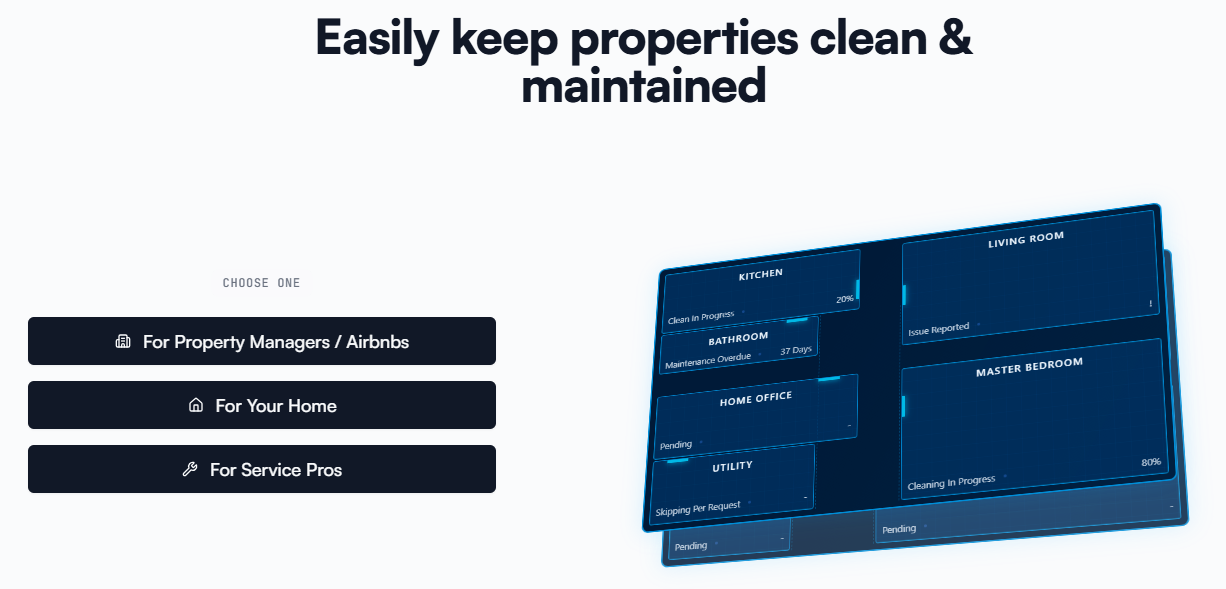
TIDY is an example of a company that charges per cleaning. While they do target rental properties, anyone can book them. And, it’s simple, you book what you need, pay for that visit, and owe nothing in between.
How the Platform Works
TIDY runs as an online booking platform. You choose the type of cleaning you want, select a time, and book it through the site or app without calling anyone.
You can book a one-time cleaning or set up visits that repeat on a schedule.
How the Pricing Is Structured
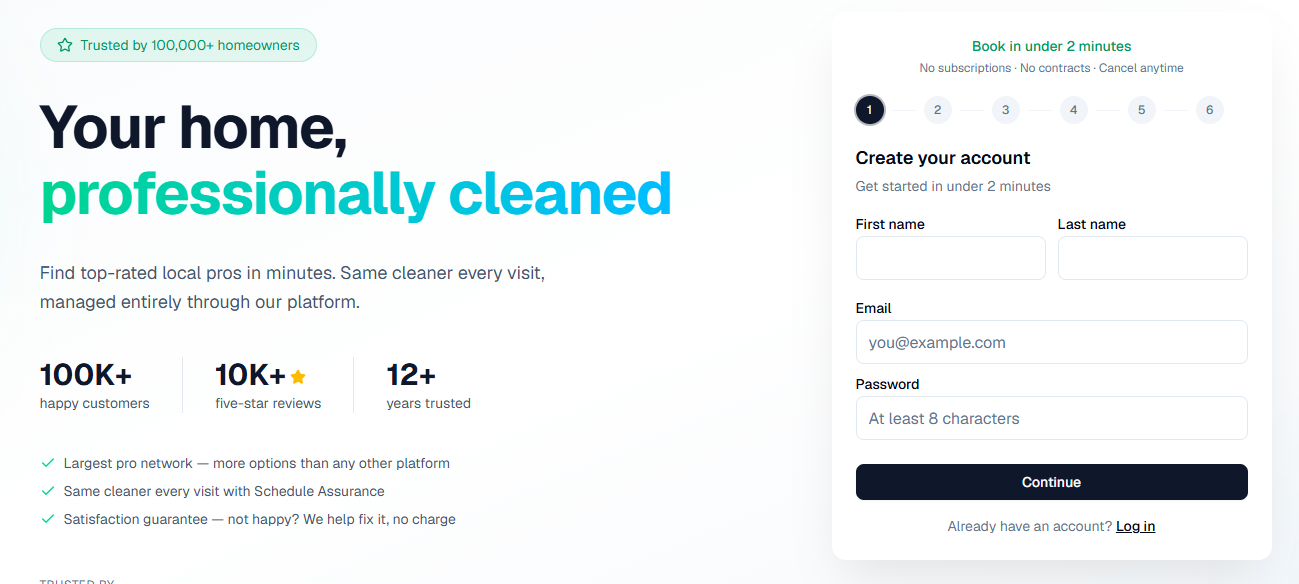
You pay for each cleaning as you book it. There’s no monthly fee and no subscription to maintain between visits.
Recurring customers may still get lower rates in some cases, depending on the service selected or the individual provider. That discount comes from the booking pattern rather than from paying to be a member.
The price of any given cleaning varies based on a few things:
- Your location: rates shift depending on cost of living and demand in your area. The national average for a standard cleaning runs around $180 for a 3-bedroom home, though prices can fall in the $100–$300 range depending on where you live. You can get a quote in under 2 minutes.
- The size of your home: more square footage and more rooms mean more time on-site, which drives the price up.
- How long the cleaning takes: a quick standard clean costs less than a deep clean, which covers baseboards, appliances, and hard-to-reach spots and typically runs 1.5–2x the standard rate, often landing between $200 and $450.
- Which cleaner you book: rates can vary by experience level and any specific requirements you set, like background checks or years on the job, with typical hourly rates running $45–$90/hour per cleaner.
Because there’s no membership fee, nothing accumulates during the months you don’t book. That makes this model a better fit for people who clean occasionally or can’t predict how often they’ll need it, though the higher per-visit rate is worth weighing if you book regularly.
Homeaglow as One Example of a Membership Model
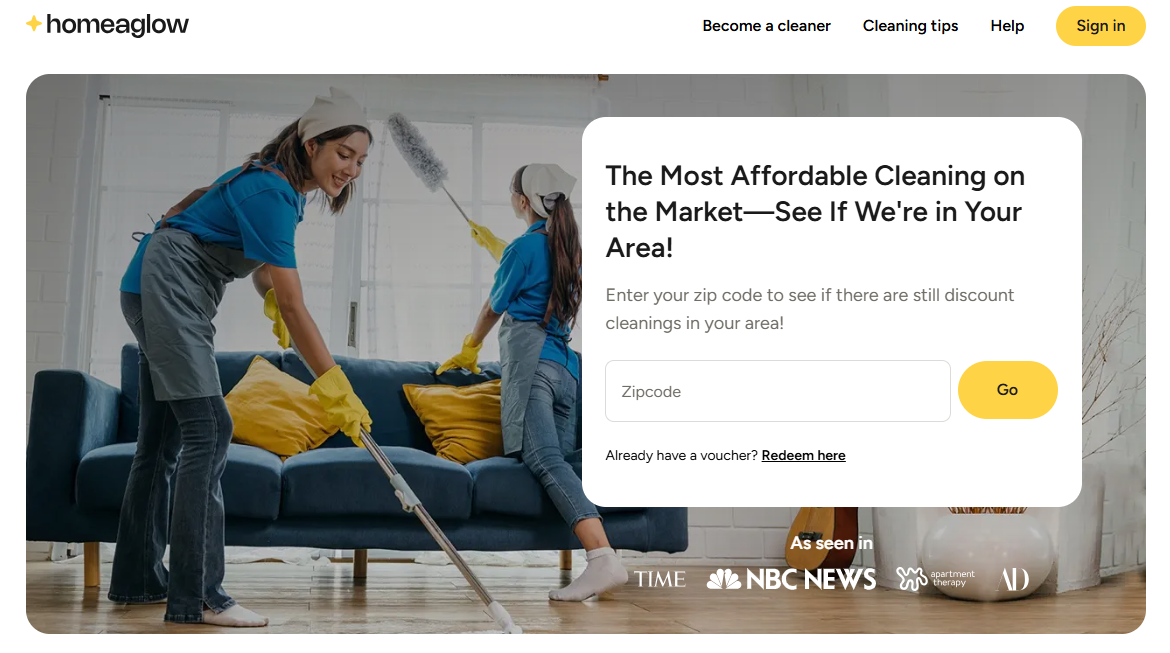
Homeaglow is one company that uses the membership model, and it’s a good example of what it looks like in practice.
How the Platform Works
It operates as an online marketplace rather than a traditional cleaning company. You browse profiles of independent cleaners in your area, read reviews, and pick who you want to book.
Cleaners on the platform go through a background check process. They also bring their own supplies and equipment, so you don’t need to have anything ready.
How the Pricing Is Structured
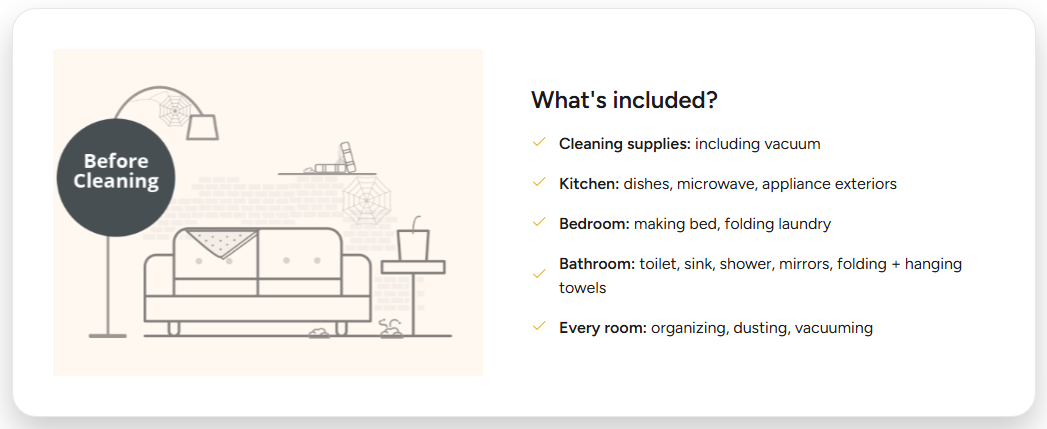
Pricing runs through a membership called ForeverClean, and the discounted hourly rate is tied to it. There is a low promotional price (currently advertised) at $9 for a first 2-hour “light cleaning” session. This sounds like, and can be, a great deal. After that, they have subsequent cleanings as little as $18/hour.
Like any membership, their fee ($59/month) applies whether or not you book that month, though unused amounts may be applied as credit toward future bookings depending on the current terms.
There’s also a minimum 6-month commitment period. Canceling before it ends can trigger an early termination fee (between $150–$200), so you can’t just get the $9 initial cleaning and then cancel without penalty.
Pricing and terms change over time and can differ by location, so check the current details on the site before booking.
Comparing the Annual Cost

The easiest way to see how cleaning frequency affects cost is to compare the total annual cost under each pricing model. The math is the monthly fee plus the discounted price for each cleaning, added up across a year, against paying full price for the same number of visits.
The following examples assume a cleaning costs $180 without a membership (TIDY’s typical rate), or a 2-hour cleaning at Homeaglow’s standard member rate of $18/hour ($36 per visit), plus a $59/month membership fee. Note that $18/hour is Homeaglow’s advertised rate, actual rates can run higher depending on your location and cleaner.
While actual prices vary by company and situation, this illustrates how cleaning frequency changes the total cost.
| Cleaning Frequency | Pay-Per-Clean | Membership | Difference |
| 4 cleanings/year | $720 | $852 | Membership costs $132 more per year |
| 12 cleanings/year | $2,160 | $1,140 | Membership saves $1,020 per year |
| 24 cleanings/year | $4,320 | $1,572 | Membership saves $2,748 per year |
| 48 cleanings/year | $8,640 | $2,436 | Membership saves $6,204 per year |
The example shows that memberships become more cost-effective as you schedule cleanings more often. If you only book a few cleanings each year, the monthly fee may outweigh the discounted rate. If you book regularly, the membership is more likely to save you money.
Before signing up, count how many cleanings you realistically booked in the past year and what you’re likely to book in the year coming up. Then run those numbers against the membership option, including the reduced cleaning fee but with the monthly fee added in.
Questions to Ask Before Choosing Either Cleaning Option
The right choice comes down to a handful of specifics about your situation and the plan itself. Working through these before you sign up will tell you more than any comparison of advertised rates. Here are some things you should start asking yourself.
Questions About Your Own Habits
Start with how you use cleaning services, not how you imagine you will. Your booking history from the past year is the most reliable data you have.
- How often will I realistically schedule a cleaning?
- Will I use the membership enough to justify the fee?
- Am I paying for flexibility or for lower prices?
- What happens if my needs change partway through the year?
Questions About the Terms
This is more about the fine print. These answers should be easy to find, and it’s a warning sign if they aren’t.
- Is there a minimum commitment period?
- Is there a fee for canceling early?
- How do I cancel, and how much notice is required?
- Does an unused monthly fee roll over as credit, or is it gone?
Questions About What’s Included
Two services at the same price can cover very different amounts of work. Knowing what’s in the base rate keeps you from getting surprised by add-ons at the end.
- Does the cleaner bring supplies and equipment, or do I provide them?
- What tasks are covered in a standard cleaning, and what costs extra?
- Can I choose my cleaner, or am I assigned one?
- What happens if a cleaner cancels or the job isn’t done properly?
Questions About Long-Term Value
The last set looks past the first month. A price that works today only matters if it still works a year from now.
- What will I pay per cleaning once the introductory offer ends?
- How much would a full year cost under each option?
- Can rates or fees change while I’m committed, and will I be told in advance?
- If I pause or reduce my schedule, does the pricing still make sense?
So Which Option Is Right for You?

Neither option is better.You’ll have to look at your own habits and needs and then make a decision.
When Paying Per Clean Makes Sense
Pay-per-clean costs more per visit but nothing in between. That’s the better trade when your bookings are unpredictable or infrequent.
- You book occasionally, like before holidays or for a seasonal deep clean
- You don’t want a charge appearing whether you use the service or not
- Your schedule shifts often and you can’t predict your cleaning needs month to month
- Flexibility is worth more to you than a lower hourly rate
When a Membership Makes Sense
Memberships reward frequency and consistency. If your cleaning schedule is stable and predictable, the fee spreads across enough visits to be worth it.
- You book at least twice a month, which is often where the fee starts paying for itself
- You want recurring service and would rather not rebook each time
- You’re comfortable with the commitment period and the cancellation process
- You’ve run the math and confirmed the savings beat what you’ll pay in fees over a year
If You’re Somewhere in Between
One reasonable approach is to start with pay-per-clean and track how often you book over three or four months. Then run those real numbers against the membership fee and decide. That will help you determine whether your booking habits are consistent enough for a membership to pay off.
The Bottom Line

Whether a membership saves you money generally comes down to how many cleanings you’ll book in a year. If you book twice a month or more, a membership will usually cost less overall. If you book a few times a year, you’ll almost certainly pay more with one, because the monthly fee keeps running during the months you don’t use the service.
The rest is about reading the terms. Know what the monthly fee covers, how long you’re committed, what it costs to leave early, and what your rate becomes after any introductory offer ends. Those details are what separate a good deal from one that only looks good in the ad.