
If you are reading this, congratulations, you are likely looking at buying a home and are starting to look into a mortgage. This is a massive milestone and a huge financial decision. It can be nerve-wracking and overwhelming, especially as you start to dive into the specifics. Through this process, you are likely asking yourself a common question: which loan term do I go with? 15 years or 30 years?
My goal is to give you the basics, explain in detail the pros and cons of going with one versus another, and even provide you with some guidance on how to identify the right lenders for you.

To start, the basics:
When you first start looking to buy a home, you’ll notice everything is very expensive. No matter how you put it, buying a home is a huge feat for most Americans. The current market certainly doesn’t help. The median home price is about $410K where the median household income is around $84K per year. With the disparity between income and housing costs, the majority of homebuyers will use a mortgage, or a loan specifically for a house. As you begin looking for a mortgage, you’ll frequently see the following terms, especially as you begin comparing the different options.
- Loan Type: This refers to the kind of mortgage. Common mortgages include conventional loans, FHA loans, VA loans, and USDA loans, each with its own eligibility requirements, costs, and features.
- APR: APR, or annual percentage rate, is a broader measure of the cost of borrowing than the interest rate alone. It can incorporate the interest rate plus certain fees and costs associated with the loan, which makes it useful when comparing mortgage offers.
- Loan Term: This is the length of time over which your mortgage is scheduled to be repaid. 15- and 30-year fixed-rate mortgages are two of the most common choices, although other terms are available.
- Down Payment: This is the portion of the purchase price you pay upfront rather than borrowing. A larger down payment generally means borrowing less. On some mortgages, there are requirements for mortgage insurance depending on the down payment percentage.
- Principal: The amount you borrowed to buy the home.
- Interest: What you pay the lender for borrowing the money. It is the cost of financing the purchase.
- Amortization Schedule: This shows how each mortgage payment is divided between principal and interest over the life of the loan. Early in the mortgage, more of each payment goes toward interest. As the balance falls, an increasing share goes toward principal.
The Decision: 30-Year vs 15-Year
A 30-year mortgage tends to be the most popular, being the choice for nearly 90% of homebuyers. Why is that? It boils down to how much your payments end up costing.

When you opt for a 30-year mortgage, the cost of your home will be spread over 30 years versus only 15. Therefore, your monthly payment will be much lower. However, you will pay more in interest over the term of the loan. A longer-term loan means you can afford a higher loan for your money, since banks look in terms of how much you make per month to determine your loan qualification.
For example, let’s assume you make $10K a month after tax. You buy a house for $1M, put down 20% or $200K, and lock in a 6% interest rate over 30 years. Your $800K loan will cost you about $4,796 a month, or about half of your take-home pay. In comparison, a 15-year loan would cost you $6,751 a month, almost $2K more. This is not including property taxes and insurance, which depending on the location, could be as much as another three or four hundred a month.
The downside, of course, is that now you will pay more than half a million dollars over the course of the loan versus the 15-year loan. From a purely financial standpoint, 15-year mortgages can make much more sense for some people. If you make enough to comfortably utilize a 15-year mortgage and are good with your money, then there are other options.
One method is if you still secured the 30-year loan, took those extra $2K per month, and invested in the stock market’s S&P 500, which has averaged more than 11% annual return in the last 40 years. Over the course of the 30 years of the mortgage, you could have a very large nest egg.
In practice, though, here are a few caveats:
- Home ownership is expensive, and things need fixed, like a new roof, new gutters. So investing can be difficult.
- Prior returns don’t guarantee future returns.
- You have to be okay with volatility. The stock market is volatile, jobs aren’t guaranteed, sometimes money is needed for things outside of home ownership.
What else makes the 15-year and 30-year mortgage different?
Well, in the above scenario, we assumed that you would get the exact same rate on both loans. Typically, 15-year mortgages come with lower rates. Banks are willing to have slightly lower rates for shorter loans as it carries less risk. This is the common time value of money principle, which says that money today is worth more than money tomorrow. If they have to wait an extra 15 years to get their full loan repaid, that creates more time for things to go south.
The 30-year fixed-rate mortgage averaged 6.76% as of September 10, 2026, whereas the 15-year fixed-rate mortgage averaged 6.09%.
This changes the equation. To put that into perspective, the 30-year mortgage now lands at a monthly payment of $5,194, with a total interest paid of $1,069,877, whereas the 15-year lands at $6,790 per month, with a total interest paid of $422,167. This is a nearly $650K difference. This is almost $140K more versus the 6% rate scenario discussed earlier, simply because the 15-year mortgage comes with a lower interest rate.
Another major differentiator between a 15-year and 30-year mortgage is that a 15-year mortgage is harder to acquire. Why? It comes down to Debt to income (DTI) ratio. This is the way lenders gauge your ability to meet your monthly obligations and ultimately pay off your debt. The calculation is simple: Total Monthly Debt Payments divided by Gross Monthly Income. The standard DTI required is 36%-45%, though this ranges depending on the kind of loan.
Take all of your monthly payments, car, student loan, credit card payments and divide it by your gross income. If you have $1050 already in monthly payments and want to acquire a $2500 mortgage, but only make $5000 a month, your DTI would be 71%. Can you comfortably afford the loan? Probably not. This is why banks have restrictions on how much debt you can take, to protect consumers from being overleveraged. So going back to the question of 15-year vs. 30-year, a 15-year will require you to have much more income to qualify for the same home, simply because the higher monthly payment drives your DTI up.
Another thing to consider is your timeline, specifically how long you plan to stay in the home. A main reason you opt for a 15-year is to pay less interest. This is no longer as relevant if you plan to only stay in the home for a few years, since you’d likely sell the home and pay off the mortgage. At that point, you might value having smaller payments and the flexibility that comes with a 30-year mortgage.
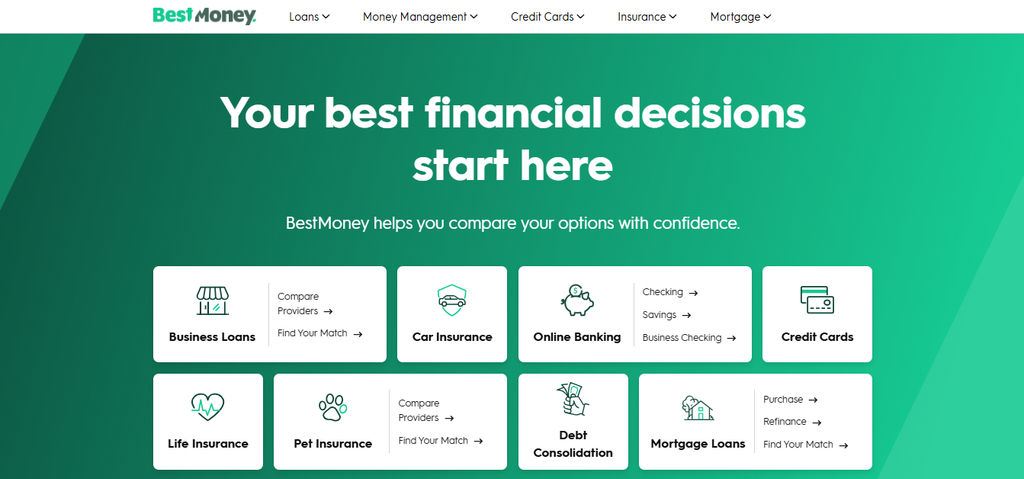
So how do you find the best loan and current market rates? Well, this is where using a comparison site like NerdWallet, BestMoney, or Bankrate is key. Rates can vary from one lender to another, and even a small difference in your rate can make a meaningful difference over the life of a mortgage. Comparison sites make it much easier to scan and digest the different offerings available, saving you a lot of time and headaches. Many of the websites allow you to apply from them directly, further decreasing the time spent.
So Which One Should You Go With?

It depends on your personal circumstances, your income, your other financial goals, how long you expect to stay in the home, and, perhaps most importantly, how comfortable you are with your monthly payment.
A 15-year is likely your best bet if you have a highly monthly income and plan on living in your house for at least 10 years. Other aspects to think about is the house is newer, and unlikely won’t need updates soon, and you want to own the house outright as quickly as possible.
A 30-year loan is likely better if you prioritize having a lower monthly payment and you’re okay paying more in interest as long as it allows you to own your own home. This option can also make homeownership more attainable. If the property may need a new roof, is older, or you don’t want to pay a higher amount every month.
One popular strategy some choose is opting for the 30-year mortgage but paying an extra month every year on top of the typical 12 monthly payments. Assuming your lender applies that additional payment directly to principal, it can have a significant impact on how quickly you pay off the loan. Your regular payments go toward both principal and interest, with more of the payment generally going toward interest in the first few years.
An extra payment applied to principal, however, reduces the balance immediately and therefore reduces the amount of interest you pay going forward. This strategy consequently lowers your total interest paid by almost $200K using the $800K, 6%, 30-year loan example. Just confirm with your specific lender or servicer that extra payments will be applied to principal. Some loans can have prepayment penalties. Although they do not normally apply to small extra principal payments.
Where Do You Go From Here?
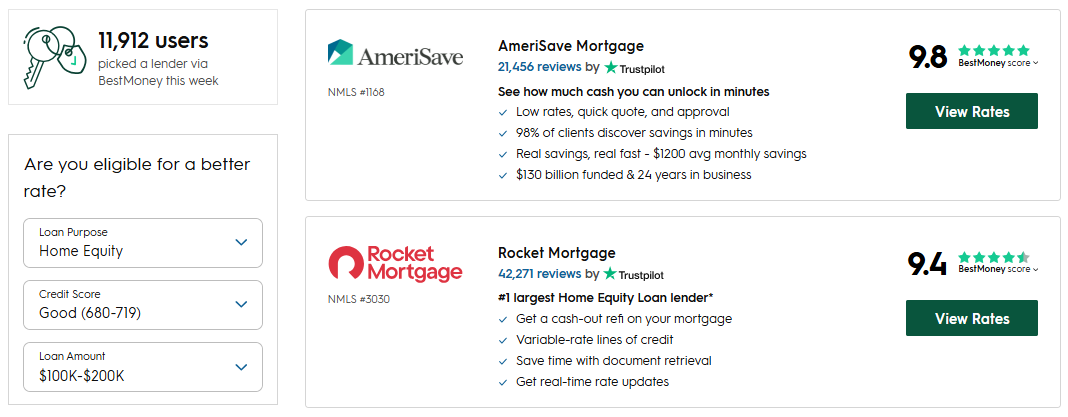
Now that you understand the key differences between the two term lengths, you should begin shopping around to gauge the rates being offered by a variety of different lenders.
As mentioned earlier, definitely take advantage of comparison sites like BestMoney or NerdWallet that specialize in making it easier to compare lending options for your specific scenario. These types of comparison sites can provide a variety of tools and calculators to help you understand the numbers before making a decision. I find NerdWallet to be a fantastic option because of its UI, ability to use AI within their site to answer questions and guide your decision, and how flexible it is in terms of filtering options based on your specific profile (credit score, loan term, etc). BestMoney works well as it provides you with an affordability calculator. This makes it easy to see how expensive of a home you can afford, and also lets you slice and dice the results based on your profile. The downside I found was it doesn’t give you the rates up front for mortgages, though it does for personal loans.
Comparison sites are typically free to use because they receive compensation from lenders and other companies featured on their platforms. BestMoney, for example, says it does not charge consumers for its service and may receive fees from lenders listed on its site.
Just because they receive compensation does not mean they are not reliable. Think of it as advertising or marketing. They can be a useful tool for quickly comparing lenders and rates that would otherwise take hours of individual research. Just remember that a comparison site should be a starting point rather than the final decision. I actually recommend using multiple comparison sites to ensure you get a large breadth of options while you are doing your search.